

Crash lock and glued cartons
We produce crash lock and glued cartons for businesses that need cartons supplied ready for fast assembly and reliable packing. From retail sleeves to shelf ready outers, we help Durban and South African clients match board choice, print finish and carton style to the job.
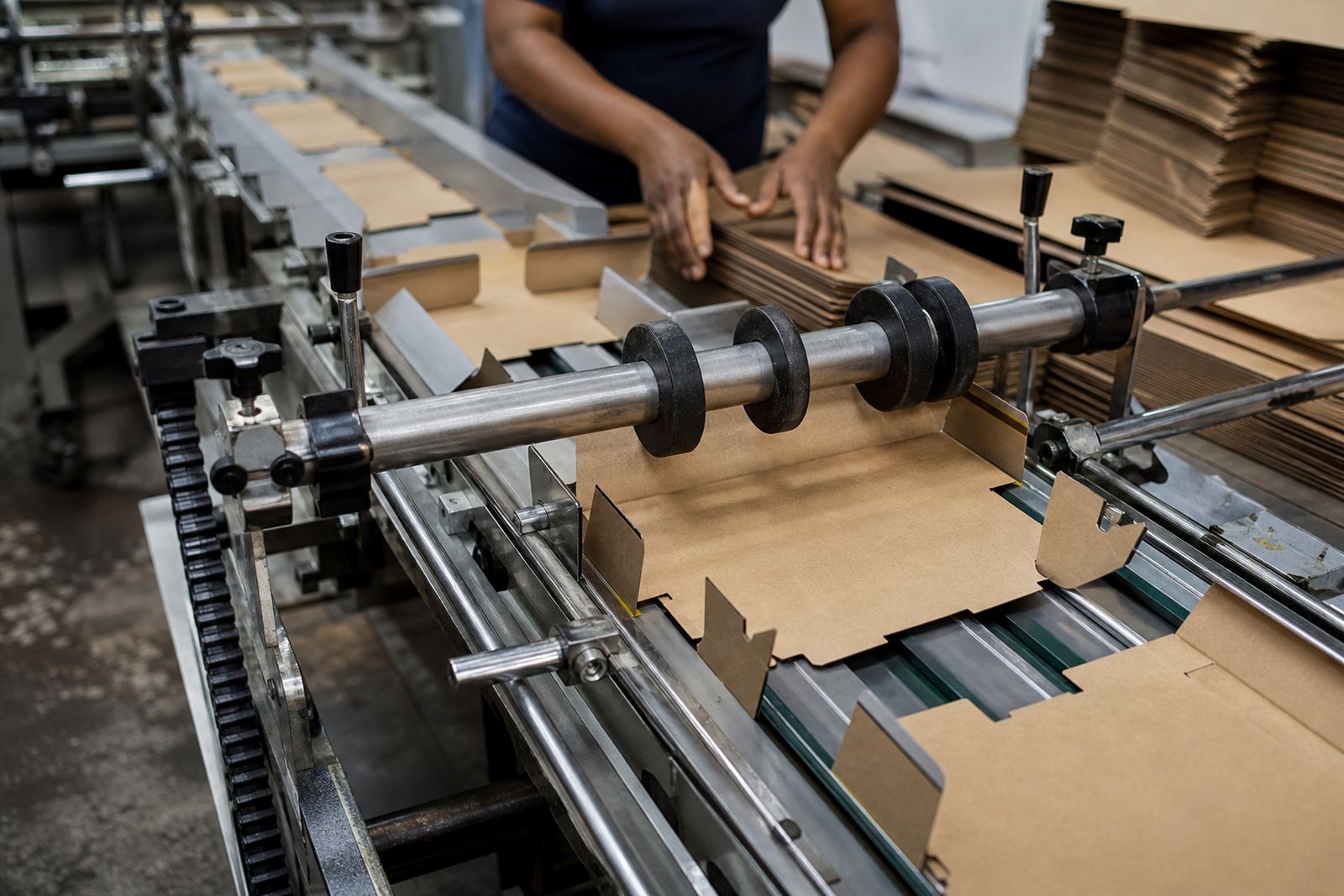
Cartons built for faster packing lines
Crash lock and glued cartons are used where packing must move quickly and the finished pack must hold its shape properly on shelf, in transit or at the till point. A crash lock base arrives pre-glued so the bottom locks into place when the carton is opened. Standard glued cartons are supplied with the side seam bonded and delivered flat, ready for hand erection or line packing depending on the format.
We make these cartons for everyday commercial use across retail, food, pharmacy, personal care, promotional packs and general product presentation. Our Durban production work covers print, die cutting, folding and gluing in one flow, which helps keep registration, fold accuracy and fit under control. This matters when cartons need to close neatly, stack evenly and still look presentable after delivery in humid coastal conditions.
- Crash lock base cartons for quick pop-open assembly
- Side seam glued cartons for manual or semi-automatic packing
- Straight line and simple lock formats
- Printed or plain cartons for product packing and outer presentation
- Supplied flat packed for easier storage and despatch
What is included in the service
This service covers more than just putting glue on a carton blank. We review the carton structure, the board grade, print method and the way the pack will be filled and transported. Where needed, we can also align the carton run with related packaging work such as sleeves, inserts, header cards or point of sale display components.
Depending on the job, cartons may be printed digitally, lithographically or flexographically before finishing. We then die cut, strip waste, crease, fold and glue to the required style. Final work is counted, packed and prepared for collection or national despatch. If your cartons are going into distribution, we can discuss how many units should be packed per bundle or per shipper to reduce crushing and make receiving simpler.
- Board and carton style guidance
- Artwork layout checks against cutter line
- Printing to suit run length and artwork type
- Die cutting, creasing, folding and gluing
- Bundling, labelling and practical packing for transport
How the process works step by step
We start with the product and the intended use of the carton. Size, weight, packing method and shelf presentation all affect the structure. If the carton needs to stand upright, carry a heavier product or survive courier handling, that is considered before print and finishing are approved.
Next, artwork is checked against the cutter guide so that logos, text, barcodes and legal copy sit clear of folds, glue areas and cut lines. After approval, the job moves into print using the method that best suits the quantity and finish required. Printed sheets or reels are then die cut and creased for accurate folding.
The final stage is gluing and inspection. Crash lock bases are set up so they open quickly when the carton is erected. Side seam glued cartons are bonded square and checked for clean adhesion, proper fold memory and tidy stacking. Cartons are then packed flat for delivery. On urgent work we can advise realistic turnaround from approval to despatch, but timing still depends on artwork readiness and quantity.
- Confirm size, product weight and carton style
- Check artwork, cutter line and glue zones
- Print on the selected board stock
- Die cut and crease the carton blanks
- Fold, glue, inspect and pack for despatch
What you should prepare before ordering
The smoother the brief, the fewer delays later. Please send the packed product dimensions in millimetres, the approximate product weight, how the carton will be filled, and whether it needs a crash lock base, tuck top, window area, insert or tamper label position. If the carton is for food, cosmetic or regulated retail use, include all mandatory panel copy and barcode requirements from the start.
Artwork should be supplied as press ready files with fonts outlined or embedded images, and colour references clearly marked. If you already have a cutter guide, send that too. Where no cutter guide exists yet, we can work from the required internal pack size and usage notes. It also helps to mention if cartons will be stored for a while before packing, because board choice and packing method can affect how well flat cartons keep their shape in warm or damp stores.
- Finished internal size in millimetres
- Product weight and packing method
- Artwork file and colour references
- Barcode, legal copy and batch marking needs
- Delivery point, bundle count and despatch timing
How pricing is worked out
Pricing is based on the practical details of the carton rather than a single rate per unit. Board grade and thickness affect material cost. Carton dimensions affect yield on sheet or reel and influence packing volume. Print method changes according to the run length and the artwork requirements. Finishing complexity also matters, especially where cartons need special die lines, multiple glue points or closer inspection during packing.
Quantities have a direct effect on setup allocation and unit cost, so it is worth asking for more than one quantity option if you are planning a launch or a repeat run. Packing and delivery are also considered in the quote, particularly for national despatch to other provinces. For an accurate quote, send the carton size, artwork, quantity and required delivery area through the enquiry form on our contact page.
- Board type and thickness
- Carton size and style
- Print method and number of colours
- Die cutting and gluing complexity
- Order quantity and delivery destination
Aftercare, storage and reorders
Once your cartons arrive, store them flat in a clean dry area away from direct heat and floor moisture. In Durban and other coastal areas, humidity can affect board stiffness if packs are left open for too long, so keep bundles wrapped until needed. During colder inland delivery periods, allow cartons to settle to room conditions before high volume packing if glue seams feel firm from transport.
If you are reordering, tell us whether the product size, fill weight or barcode panel has changed. Small changes can alter the fit or affect where folds land on artwork. Keeping a sample from the previous run is useful and can prevent avoidable issues with closure or shelf appearance. We can also help plan repeat production so you receive cartons in practical lots rather than overfilling storage space. That saves handling later and keeps the work moving nicely.
What our Commercial Printing customers say
Verified Google reviews
Questions we get asked
What is the difference between a crash lock carton and a standard glued carton?
A crash lock carton has a pre-glued base that locks when the carton is opened, making it quicker to erect during packing. A standard glued carton usually has a bonded side seam and still needs the base and top closed during filling.
Can you help if we only have product sizes and no cutter guide yet?
Yes. If you provide the packed product dimensions, weight and intended use, we can work with a suitable carton layout and finishing route before print is approved.
Do you deliver cartons outside Durban?
Yes. We serve Durban and KwaZulu-Natal directly and can arrange national despatch across South Africa with cartons packed flat for practical transport.
Also worth a look
Ask for a quote
Send the print, packaging or branding details, sizes, quantities and delivery town through the contact form, and MGP Services will reply with a quote for the work.
Open the contact form