
Lithographic printing
Lithographic printing suits medium to high volume work where steady colour and repeatable results matter. We produce commercial print and packaging work from Durban for businesses that need reliable runs, clean finishing and practical delivery across South Africa.
What is included in our lithographic printing service
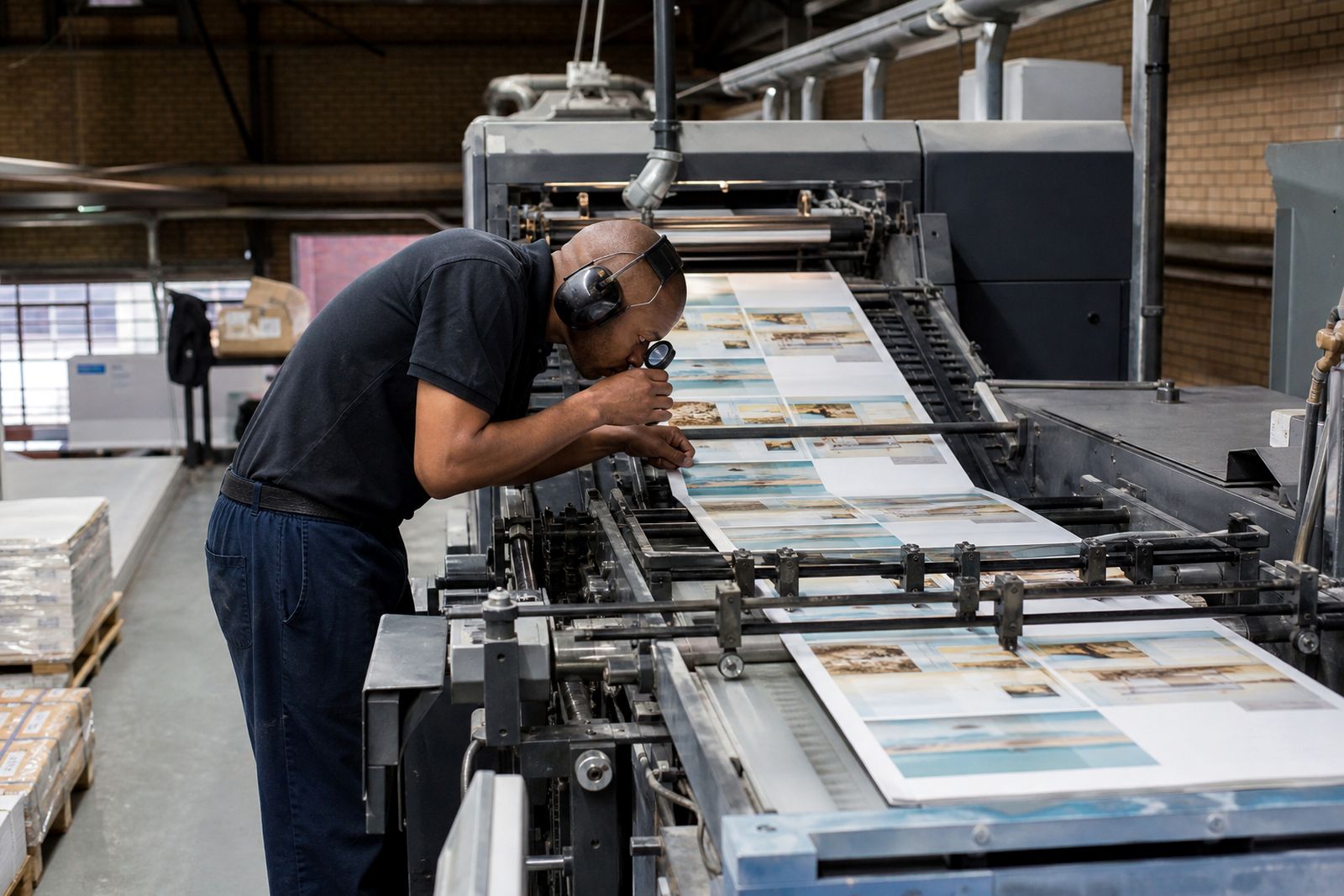
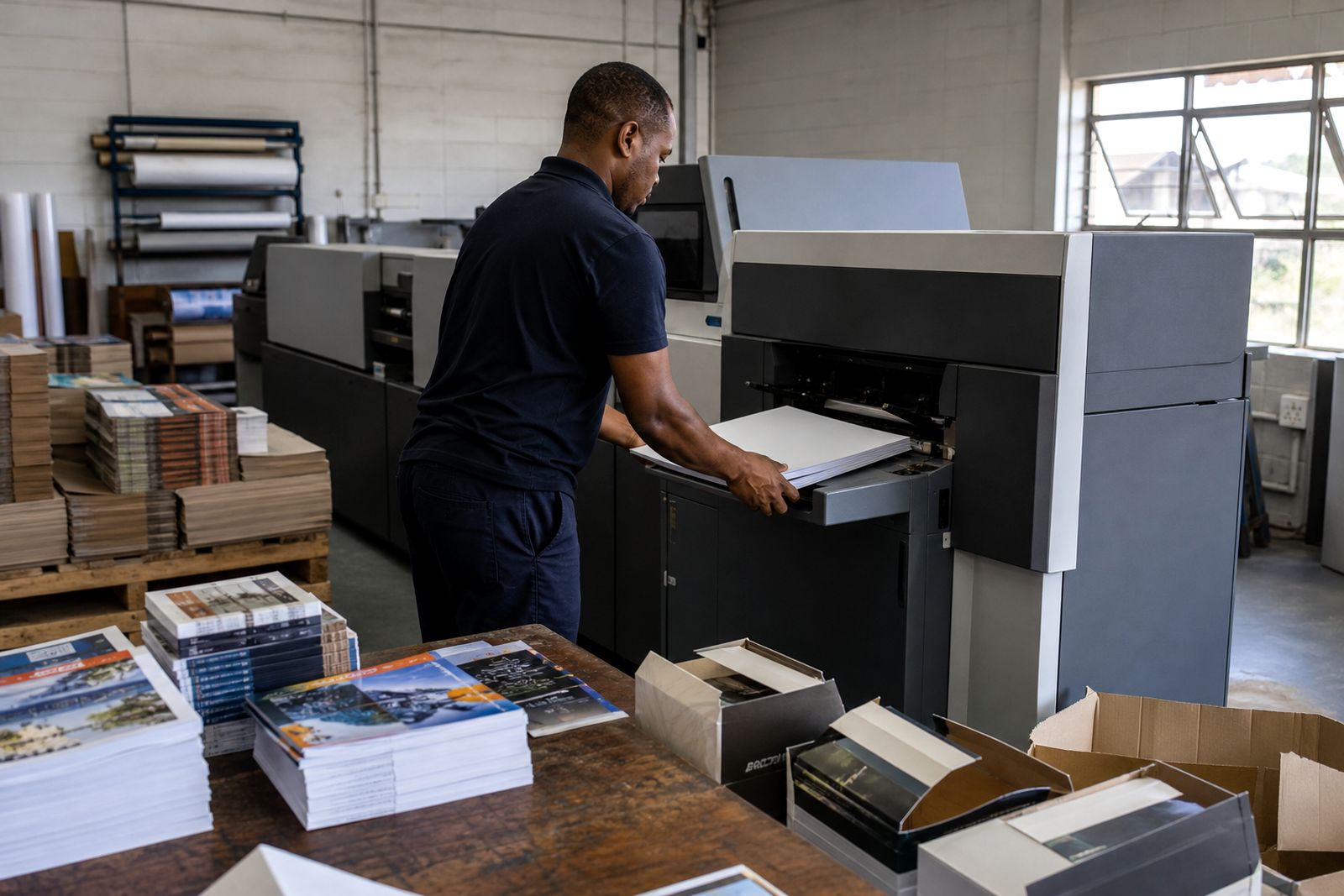
Our lithographic printing service covers sheet fed production for commercial print, packaging components and branded material that needs a tidy, consistent finish across a full run. It is a good fit for brochures, flyers, inserts, presentation folders, posters, product sheets, carton outers, sleeves and point of sale pieces where the quantity is too high for a short digital run and colour consistency needs to hold from the first sheet to the last.
Work is handled as a complete job, from file check and proofing through printing, drying time where needed, and the finishing stages that follow. We also coordinate packing and despatch so bulk quantities can move out cleanly to Durban, wider KwaZulu-Natal, or national destinations.
- CMYK process printing, with spot colour matching where required
- Single sided and double sided printing on selected paperboard and paper stocks
- Finishing such as trimming, folding, creasing and perforating
- Die cut work for folders, sleeves, cartons and shaped promotional pieces
- Gluing for selected carton and packaging formats
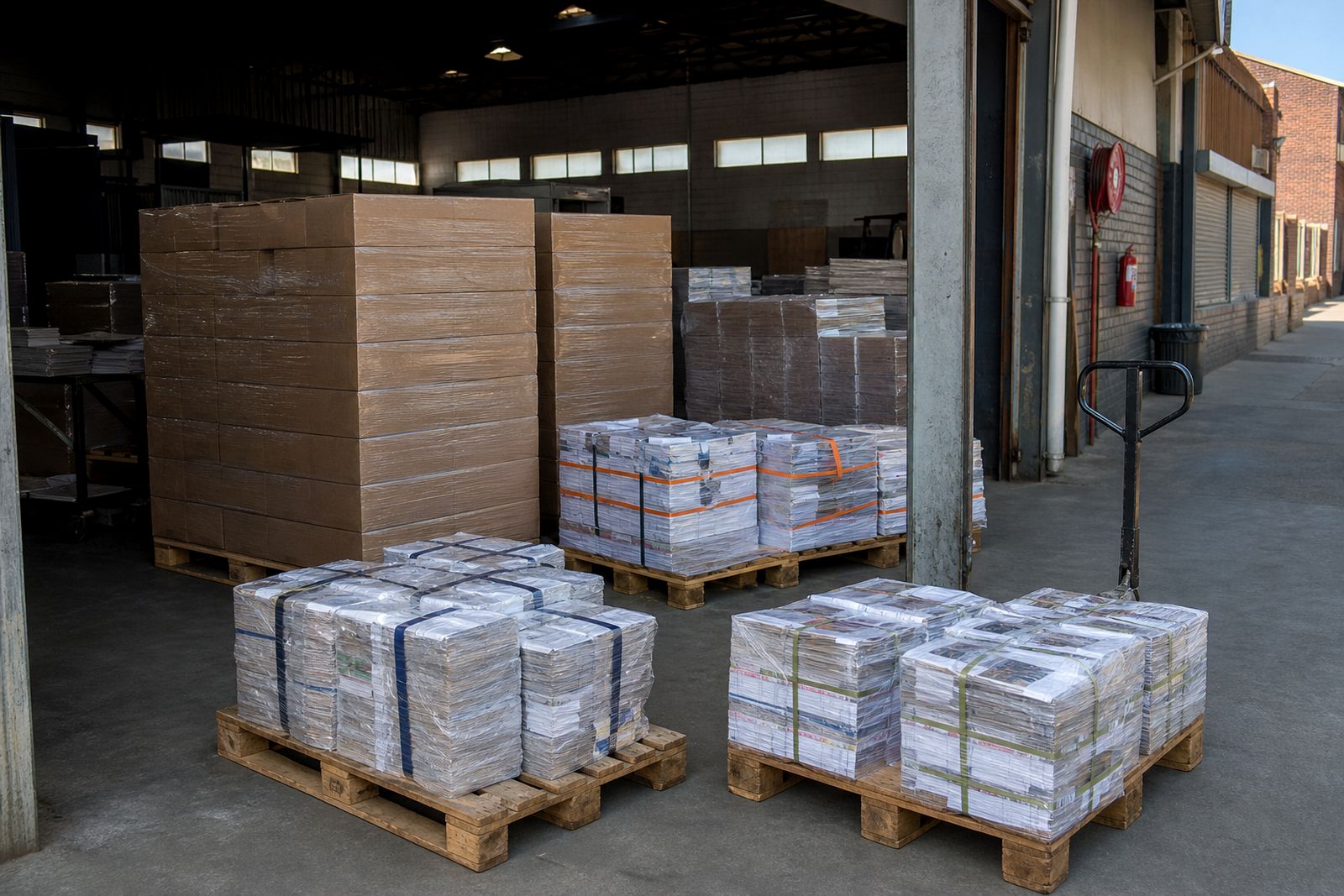
- Packing into labelled bundles, cartons or flat packed units for despatch
Where litho printing works best
Litho is usually the practical option when you need volume, stable colour and a lower unit cost across a longer run. For launch material, retail handouts, carton runs, event packs and repeated branch distribution, litho offers better value once the quantity rises enough to justify plates and makeready.
It is also useful when several printed items need to sit together as one set, such as a carton outer, an insert and a matching point of sale piece. Colour can be balanced across the job so the pack and promotional items look like they belong together, which helps on shelf and at handover points.
In Durban and the coastal belt, storage matters. Printed cartons and paper items should be kept dry and level because humidity can affect curl, especially on lighter stocks and large solid areas. We pack accordingly and can advise on sensible handling if your goods are going into a warehouse close to the coast.
Our process step by step
Every litho job follows a clear production route so the run can be planned properly and finishing can be booked in sequence. This helps avoid hold ups when a job includes die cutting, folding or gluing after print.
- Brief and quantity check: We confirm the item size, stock, quantity, pages or panels, colour requirements and finishing needed.
- Artwork review: Files are checked for size, bleed, image quality, fonts, overprint settings and supplied die lines where relevant.
- Proofing: A proof is prepared for approval so layout, copy and basic colour intent can be signed off before plates are made.
- Platemaking and makeready: Printing plates are produced and the press is set up for registration, ink balance and stock feed.
- Printing: Sheets are printed and monitored through the run for colour consistency, registration and marking.
- Drying and curing time: Where needed the sheets are allowed proper time before moving into the next stage, this is important for clean finishing.
- Finishing: Jobs are trimmed, folded, creased, perforated, die cut or glued according to the specification.
- Packing and despatch: Finished work is counted, packed and prepared for collection or national delivery.
What you should prepare before sending artwork
Good files save time and reduce the risk of rework. Litho is less forgiving of setup mistakes on a long run because once plates are made and paper is booked, changes can affect the schedule and waste material. If your job includes cartons or shaped pieces, the dieline must match the final pack size and fold sequence.
- Supply print ready PDF files at final size with bleed included
- Keep text and important details inside a safe margin from trim and folds
- Use CMYK artwork unless a specific spot colour has been requested
- Provide images at suitable resolution for print, not web images
- Outline or embed fonts to avoid text changes
- Mark finishing clearly, including folds, perforations, creases and glue areas
- For cartons, show panel order, tuck positions and barcode placement
- Check spelling, product codes and legal copy before approval
If you are not sure whether a job should be digital, litho or flexographic, send the quantities and item size through the enquiry form on our contact page and we will guide you to a practical route.
How pricing is worked out
Lithographic printing is priced from the production requirements of the job rather than from a flat rate. The main drivers are quantity, final size, number of colours, type of stock, number of pages or panels, and the finishing stages after print. A simple flyer and a glued carton may use the same printing method but they are costed very differently because the materials and finishing are not the same.
Items that usually affect the quote include paper or board grade, plate count, makeready time, double sided work, varnish or coating if required, die cutting, folding pattern, gluing method, packing format and delivery point. Longer runs generally reduce the unit cost, while urgent work can limit scheduling options. For an accurate quote, send the size, quantity, stock preference and artwork status with your enquiry.
Aftercare, storage and delivery
Once the job is complete, proper handling helps the print stay in good condition until it reaches site or goes onto shelf. Flat items should be kept in their wrapping until needed, away from direct sun, moisture and dusty floors. Cartons and sleeves should be stored level so folds stay crisp and glue lines are not stressed before packing.
For event material and campaign print, check quantities on arrival and allow enough lead time for distribution to different branches or venues. If work is going inland from Durban by despatch, we pack for transport and label cartons clearly to support easier receiving at depots and stores. Where a job forms part of a broader packaging or branding rollout we can group items by branch, pack type or event use to make unpacking simpler on your side.
If there are any concerns after delivery, report them promptly with job details and clear photos so the production team can assess the issue and advise the next step.
What our Commercial Printing customers say
Verified Google reviews
Questions we get asked
When should I choose lithographic printing instead of digital?
Litho is usually the better choice when quantities are high enough to spread setup costs and when you need steady colour across a longer run. For very short runs or urgent small batches, digital may be more practical.
Can litho printing be used for packaging cartons?
Yes. Litho is commonly used for carton outers, sleeves, inserts and point of sale packaging where print quality and consistent colour are important. The printed sheets can then move into die cutting, folding and gluing.
What file format should I send for a litho job?
A print ready PDF at final size with bleed is the usual starting point. If the job includes a carton or shaped item, include the approved dieline and clearly mark folds, creases, cut lines and glue areas.
Also worth a look
Ask for a quote
Send the print, packaging or branding details, sizes, quantities and delivery town through the contact form, and MGP Services will reply with a quote for the work.
Open the contact form