
Short run and bulk printing
We match the print method to the quantity, timing and finish required, whether you need a small top-up run or a larger national despatch. Our Durban production team handles everyday commercial print for shops, companies and event organisers across South Africa.
Short runs and bulk orders planned properly
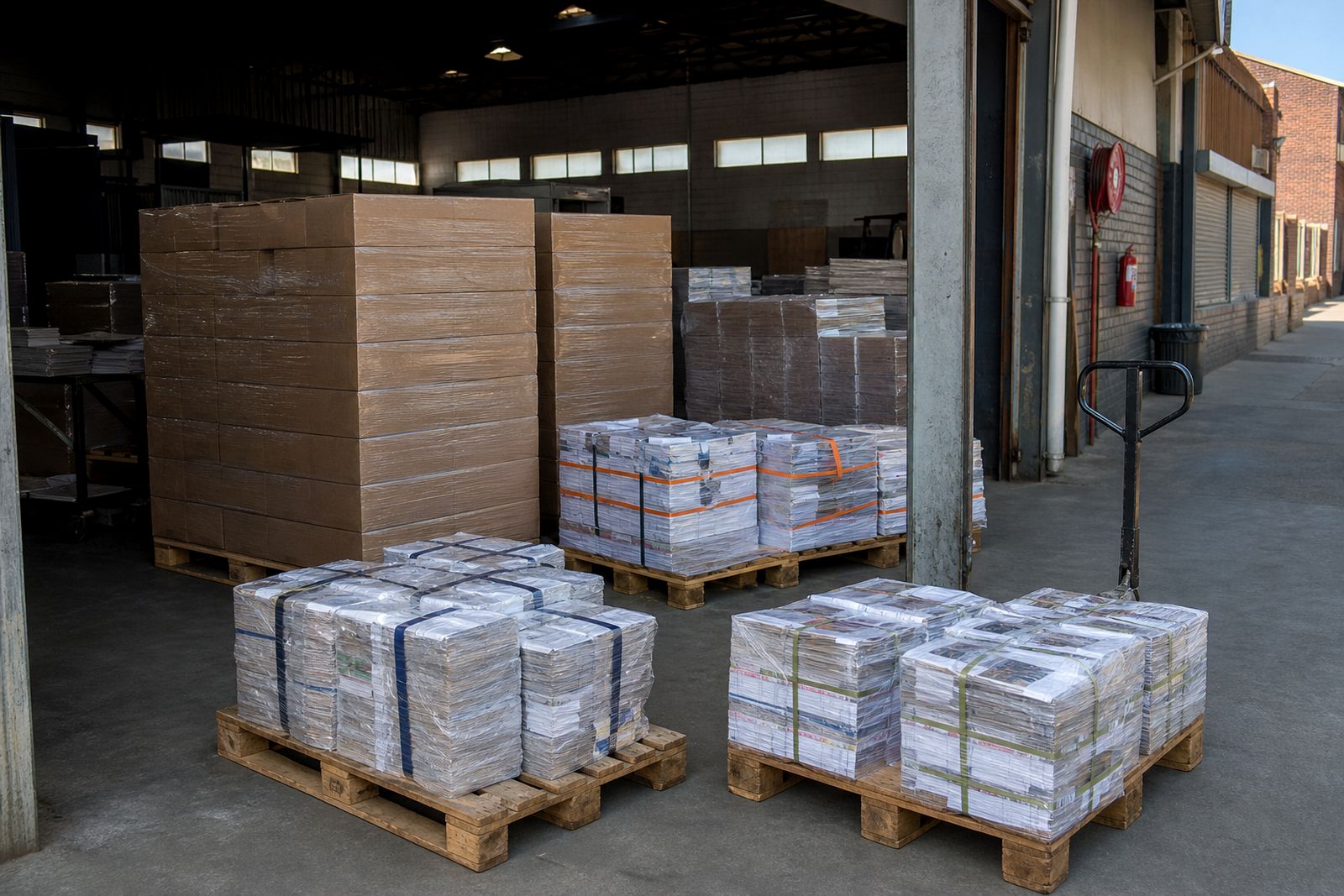
Short run and bulk printing are not just about quantity. The right choice depends on turnaround, artwork readiness, colour expectations, finishing needs, packing method and how the printed work will be used. For smaller quantities, versioned jobs and urgent top-ups, digital printing often makes sense. For larger volumes with consistent artwork, lithographic printing is usually better value over the full run. Where packaging and labels are involved, flexographic printing may also be suitable depending on the material and the final use.
We produce practical commercial work for day to day business use, including brochures, flyers, folded leaflets, catalogues, inserts, shelf talkers, labels, carton sleeves, presentation folders, point of sale material and branded handouts. Runs can be planned around launches, store roll-outs, events, seasonal demand and repeat replenishment. If your order needs several items packed by branch, region or campaign we can arrange that as part of the final despatch.
- Short run printing for urgent jobs, pilots and low volume marketing
- Bulk printing for branch distribution, retail campaigns and recurring stock
- Digital, lithographic and flexographic options matched to the application
- Finishing, die cutting, folding, gluing and practical packing included
What is included in the service
This service covers more than ink on paper or board. We review the job requirement, advise on the most suitable print route, check file setup, confirm the stock type, and plan the finishing so the order arrives ready to use. For packaging related work, we also look at the pack style, crease direction, carton strength and how the units will travel during courier or pallet despatch.
Production facilities are set up to handle both straightforward printed matter and more involved work that needs multiple finishing stages. That includes trimming, scoring, perforating, numbering, die cutting, folding, gluing and bundling. Where a job is going to Durban, Pietermaritzburg, Richards Bay, Ballito or further afield, we can pack by count, by outlet or by campaign set. This saves time on your side and helps prevent mix-ups later on.
- Commercial print on paper, board and selected packaging substrates
- Colour managed output for repeatable business material
- Finishing for flat sheets, folded items and display components
- Packing by quantity, set or delivery point
How the process works step by step
We start with the basic brief: what the item is, how many you need, where it will be used, and when it must be delivered. From there we recommend the print process and stock, then confirm trim size, orientation, finishing and packing. If the job includes several versions, such as different branches or language variants, those are scheduled up front to keep the run controlled.
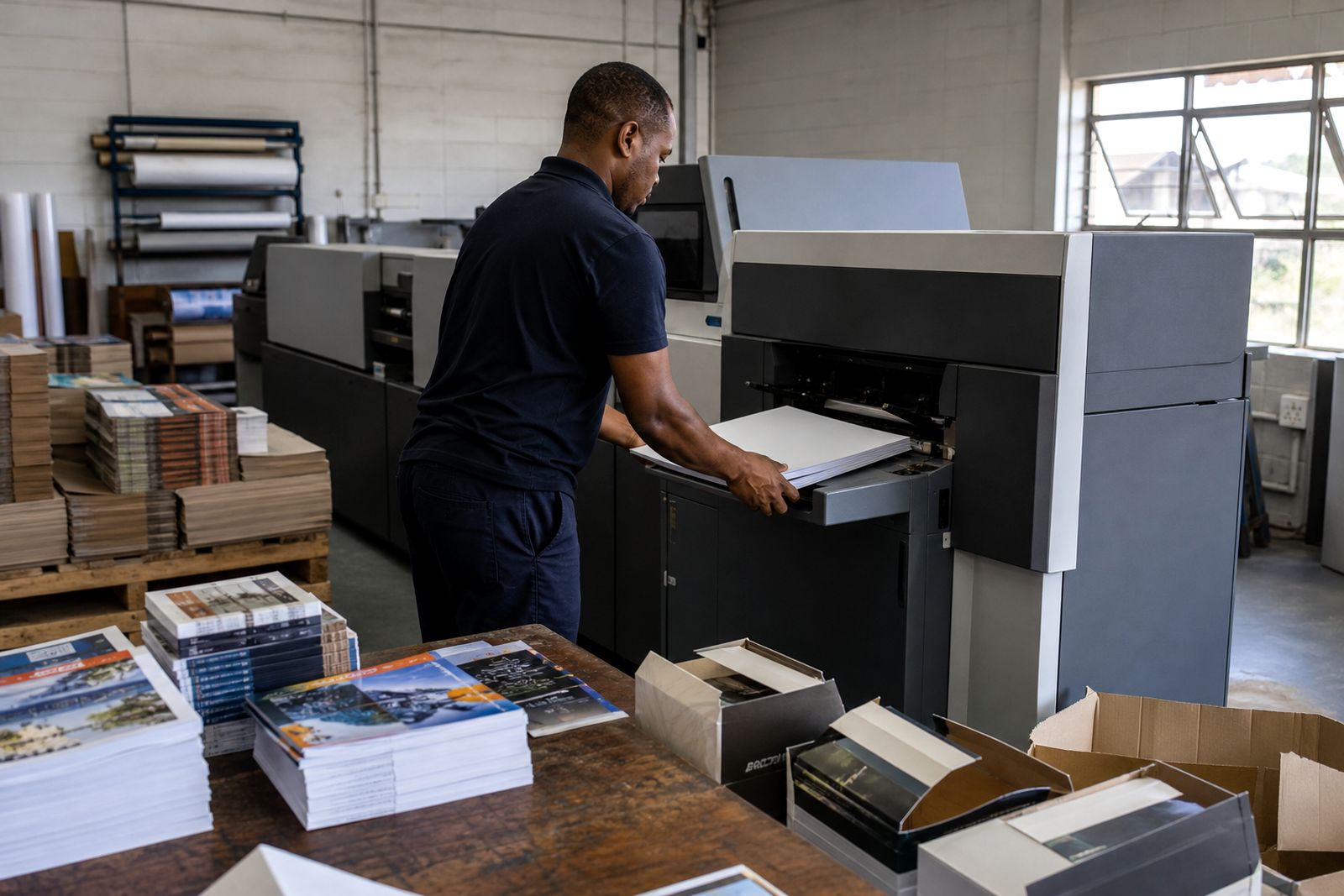
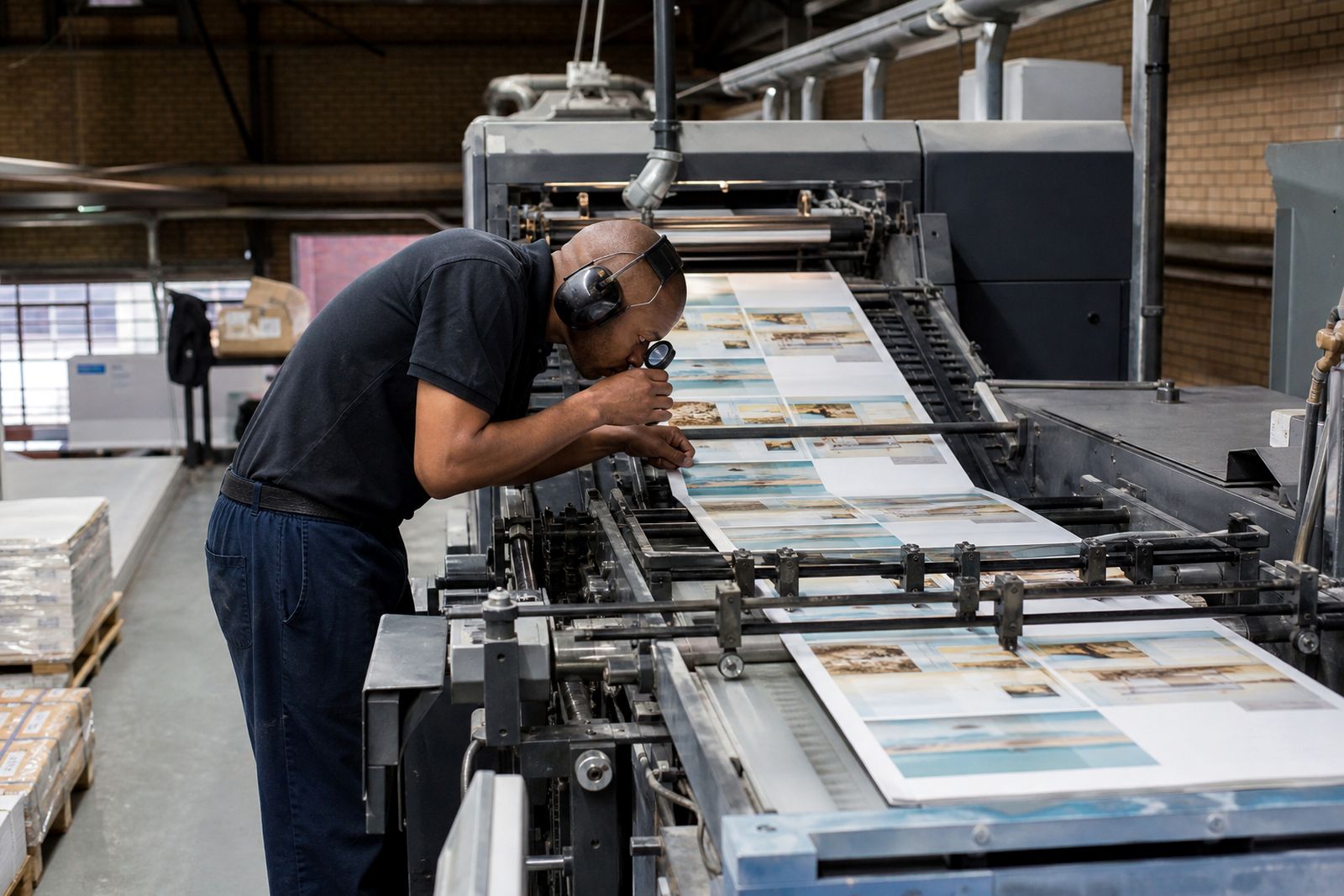
Once artwork is supplied, files are checked for size, bleed, image quality, colour setup and any special finishing lines such as folds or die cut shapes. A proofing stage follows where needed. After approval, the job moves into print production, then into finishing and final packing. Before despatch, quantities and labels are checked against the instruction sheet. It is a practical system and it works well for repeat orders.
- Brief and quantity review
- Print method and stock recommendation
- Artwork check and proofing
- Production and finishing
- Packing, labelling and national despatch
What you should prepare before ordering
The smoother the file handover, the faster the job can move. Supply artwork at the correct finished size with bleed where trimming is required. Text should be final, images should be clear at print size, and brand colours should be identified as accurately as possible. For cartons, sleeves and folded pieces, include all panel sizes and any mandatory content in the right position. If the print must fit into existing holders, racking or packaging lines, tell us the exact dimensions early on.
It also helps to note the intended use. A leaflet handed out at an expo does not need the same stock as a menu insert used every day, and a transit carton sleeve may need different board strength from a countertop promotional pack. If delivery is split across branches or event kits, send a simple schedule showing quantities per destination. Small details at the start save rework later, and can prevent delays during busy periods.
- Final artwork in print ready format
- Finished size, bleed and fold or die lines where needed
- Required quantity per version or delivery point
- Target date and delivery town
- Any special packing instructions
How pricing is worked out
Pricing depends on the full job specification rather than only the number of copies. The main factors are quantity, print method, sheet size, stock type, number of colours or pages, finishing steps, packing complexity and delivery requirements. A short run can be economical where setup needs to stay low, while a bulk run often brings the unit cost down once the order reaches the right volume for lithographic production.
Cartons and display work are also affected by die cutting layout, board grade, gluing requirements and whether items are supplied flat or assembled. Versioned jobs may need extra handling even if the artwork changes only slightly. If you want us to compare options, ask for a quote with the expected quantity bands, such as a smaller test batch and a larger replenishment run. That gives you a practical basis for planning rather than guessing, and helps your team choose sensibly.
Aftercare, storage and repeat ordering
After the order is delivered, good handling makes a difference to how the print performs. Keep cartons and printed matter dry, flat and away from direct heat, especially in coastal humidity around Durban where board can pick up moisture if left in open storage. If items are going straight to shops or events, open packs carefully and keep version labels with the bundles until distribution is complete. This is especially important for branch packs and mixed campaign kits.
For repeat work, keeping the specification consistent is the easiest way to maintain appearance and fit. Let us know if anything changed after the first run, such as a tighter holder size, a revised quantity split or a stronger carton requirement. We can then adjust the next run before production starts. During periods of power cuts or municipal delivery restrictions, allow a bit of extra lead time where possible, particularly for larger jobs with several finishing stages.
Clients can send new enquiries and repeat requests through the contact page form, with the previous item name or reference, quantity needed and any updates to artwork or packing.
What our Commercial Printing customers say
Verified Google reviews
Questions we get asked
When should I choose a short run instead of a bulk run?
Choose a short run when quantities are low, artwork may change soon, or you need stock quickly for a promotion or top-up. Bulk runs are better when the artwork is stable and the volume is high enough to justify a longer production setup.
Can you split one print order into different versions or branch packs?
Yes. We can produce versioned items and pack them by branch, town, event kit or campaign set, provided the quantity schedule and artwork versions are supplied clearly at the start.
What file format should I send for quoting and production?
A print ready PDF is usually best for production. For quoting, we also need the finished size, quantity, number of pages or panels, stock preference if known, and any finishing or delivery notes.
Also worth a look
Ask for a quote
Send the print, packaging or branding details, sizes, quantities and delivery town through the contact form, and MGP Services will reply with a quote for the work.
Open the contact form