
Die cutting
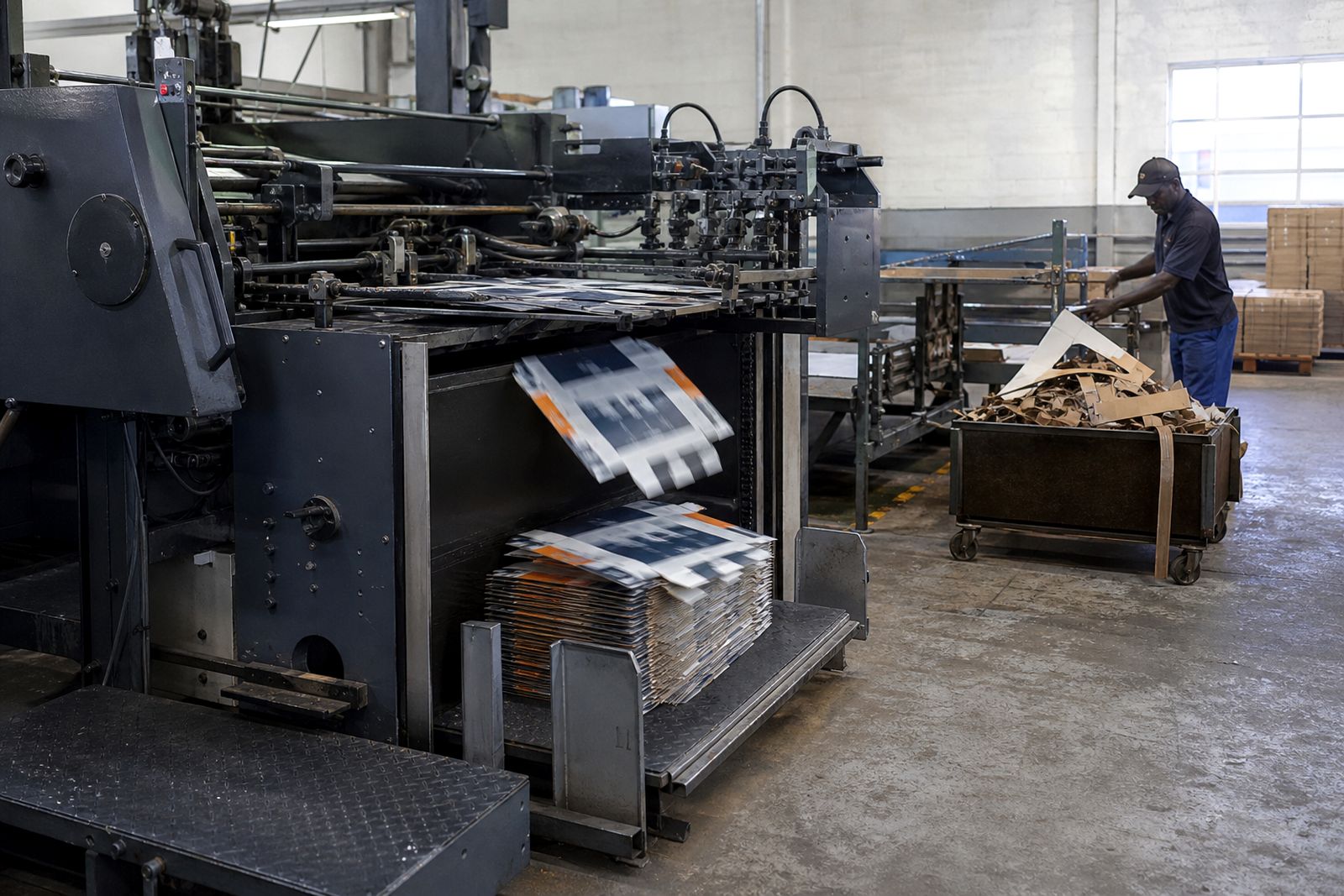
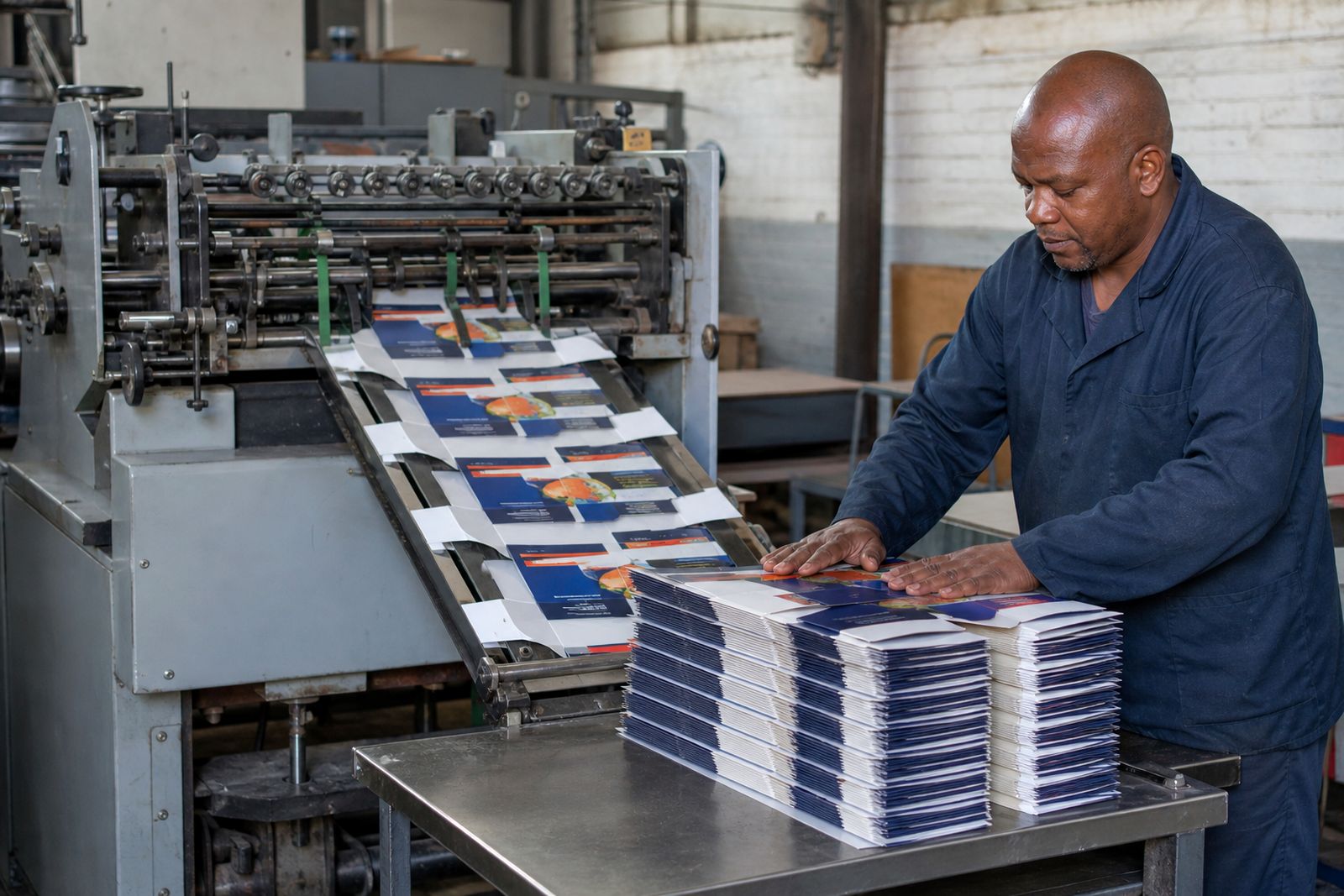
Die cutting gives printed work its final shape, whether that is a folding carton, a swing tag, a header card or a point of sale component. At MGP Services in Durban, we cut, crease and prepare printed sheets for clean folding, reliable packing and national despatch.
What our die cutting service includes
Die cutting is used when a job needs more than a straight trim. We cut custom outlines, add crease lines for folding, and prepare printed sheets for the next stage of finishing. This is a practical service for packaging converters, product marketers, shops, event organisers and companies that need shaped print work that fits properly and presents well on shelf or on site.
Our workshop handles die cutting for everyday commercial work in Durban, across KwaZulu-Natal and for clients sending jobs by despatch from other provinces. We process work printed digitally, lithographically and flexographically, depending on the board, paper or substrate and the purpose of the item.
- Packaging cartons, sleeves and tuck-in styles
- Crash lock and glued carton components
- Header cards, blister backing cards and inserts
- Swing tags, bottle neck tags and promo tags
- Wobblers, shelf strips and point of sale pieces
- Event handouts, folders and shaped promotional cards
How the process works step by step
We keep the process straightforward so that the finished pieces register correctly and run well in packing, folding and gluing. Each job is checked against the artwork and the intended end use before cutting starts.
Job review: We confirm the size, material, print method, grain direction where relevant, and whether the job needs cut lines only or cut-and-crease.
Tooling check: If a die already exists and suits the artwork, we confirm its condition and layout. If a new die is needed, the cutting form is made to the approved outline.
Make-ready: Printed sheets are positioned for accurate registration. Pressure is set according to the stock thickness and the complexity of the shape.
Cutting and creasing: Sheets are cut to shape and creased where folds are required. Test pulls are checked before the full run continues.
Strip and separate: Waste sections are removed and components are separated, counted or left nested depending on how the next process must run.
Move to finishing: Jobs can then go to folding, carton gluing, bundling, packing and despatch.
Where a carton must open and close cleanly, or stack neatly for transport, these set-up checks matter a lot. Small registration shifts can affect fold lines and glue flaps, so we look at the full job not only the cut shape.
Artwork and material preparation
Clients get the best result when artwork is supplied with clear cut and crease information. If the print is already done elsewhere, we also need the final sheet size and stock details before the job arrives at our Durban facility. This helps avoid hold-ups and unnecessary remakes.
- Supply artwork at final size with separate cut, crease and perforation lines
- Keep important text and logos clear of cut edges and fold lines
- Allow suitable bleed beyond the cut line
- Confirm substrate type, thickness and grain direction where folding matters
- Flag any reverse print, lamination, coating or heavy ink coverage
- State whether pieces must be delivered flat, folded, glued or packed in sets
For packaging, it also helps to tell us what the carton will hold. A carton for dry goods, cosmetics, promotions or takeaway items may need different board stiffness and fold behaviour. In coastal humidity around Durban some boards can soften slightly if stored badly, so clean dry packing after cutting is important.
Typical sizes, tolerances and production notes
Die cutting can be used on small tags through to larger point of sale components, provided the shape suits the sheet and substrate. Final tolerances depend on material stability, the complexity of the outline and whether the job includes folding or gluing afterwards. Simple shapes on stable board usually hold tighter than soft stocks or heavily laminated sheets.
We check for square folds, clean corners and proper release of waste areas. If a job includes slots, tabs or locking points, those features are tested so the item assembles as intended. This is specially important for cartons that will be erected in quantity, because a slight issue on one locking tab can slow packing across a full batch.
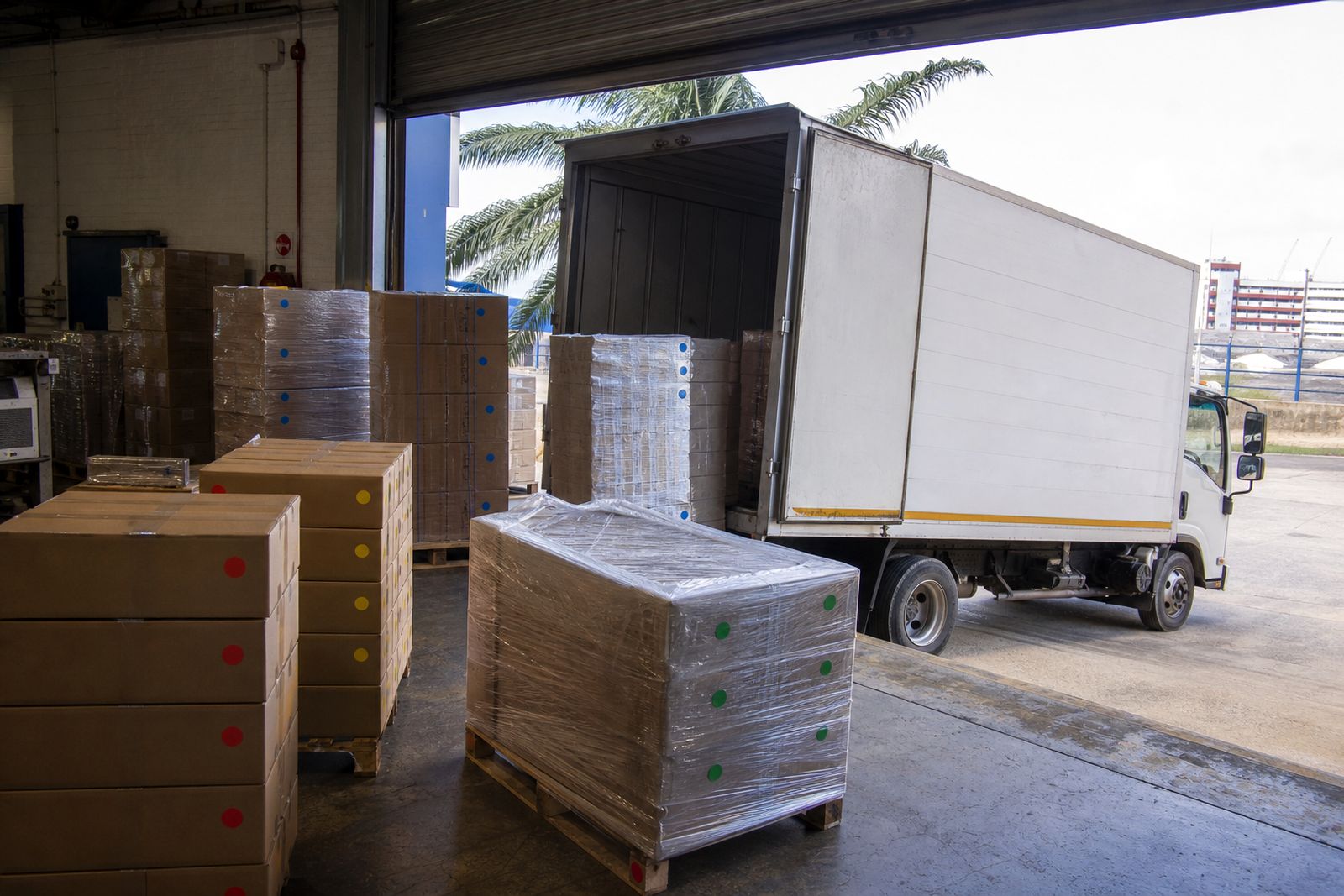
Where jobs are going onward by courier or road freight, we can pack them flat in labelled bundles or cartons to reduce scuffing and edge damage during transport. For clients ordering nationally, practical packing makes a real difference once the work leaves Durban.
How pricing is worked out
Die cutting prices are based on the work involved rather than a single flat rate. We provide quotes from the job details supplied through the enquiry form on our contact page. If the specification changes after quoting, for example a thicker board, a revised layout or added creases, the costing may also change.
- Whether a new die is required or an existing die can be used
- Sheet size, number of ups and overall run quantity
- Material type, thickness and ease of cutting
- Complexity of the outline, slots, perforations and crease lines
- Set-up time, test samples and waste removal needs
- Additional finishing such as folding, gluing, packing and despatch
Short runs can be useful for pilots, launches and event material, while larger runs usually suit established packaging lines and retail promotions. If you are not sure whether a job should be produced digitally, lithographically or flexographically before die cutting, we can review the application and quote on the practical route.
Aftercare, packing and delivery
Once the cutting is complete, the next priority is keeping the work clean, square and easy to use on arrival. We can bundle and label jobs by version, size or branch split, then pack for collection or national despatch. Flat packing is common for cartons and point of sale pieces because it saves space and protects fold accuracy.
Clients should store finished work in a dry indoor area away from direct sun and damp floors. Cartons and shaped print pieces should stay in their wrapping until needed, especially in humid coastal conditions. If the job will be used at an event, give the material time to acclimatise before assembly and avoid forcing folds against the crease direction. A little care here prevents cracked edges and bent tabs.
If your project includes print finishing after die cutting, we can coordinate the sequence so the pieces move efficiently from cutting to folding, gluing and dispatch. That keeps turnaround practical and avoids extra handling, which can mark the work if it is moved too often.
What our Commercial Printing customers say
Verified Google reviews
Questions we get asked
Can you die cut work that was printed elsewhere?
Yes. We can process externally printed sheets if the stock, final sheet size and artwork lines are confirmed first. This helps us check registration and plan the correct cutting and creasing set-up.
Do all carton jobs need a new die?
Not always. If an existing die matches the approved shape, size and flap layout, it may be reused. If the outline or fold pattern changes, a new die is usually required.
Can you pack and send finished work outside Durban?
Yes. We pack finished jobs for collection or despatch across South Africa. Flat packing, bundling and clear labelling help protect the work in transit and make receiving easier.
Also worth a look
Ask for a quote
Send the print, packaging or branding details, sizes, quantities and delivery town through the contact form, and MGP Services will reply with a quote for the work.
Open the contact form