

Folding
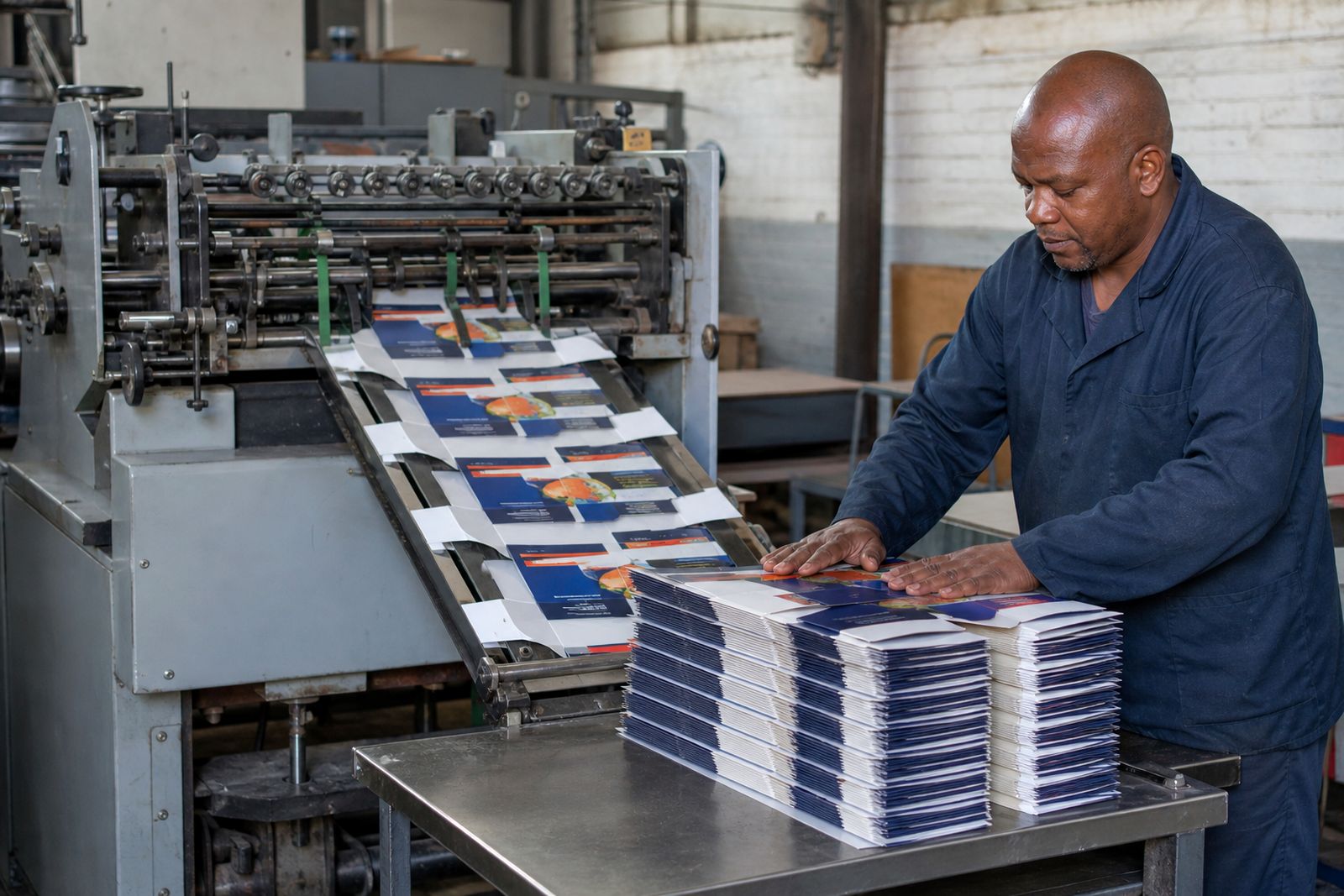
We provide neat, consistent folding for printed inserts, sleeves, leaflets and carton work. Our Durban production team handles folding as part of a practical print and packaging process for clients across South Africa.
What Is Included In Our Folding Service
Folding is more than putting a crease into a printed sheet. For commercial print and packaging it needs the right grain direction, clean score lines where needed, and steady alignment so the finished piece sits square and packs properly. We fold marketing inserts, instruction sheets, sleeves, folded leaflets, menu cards, direct mail pieces and carton components that move on to gluing or final packing.
For packaging work, folding is planned together with die cutting and gluing so panels meet correctly and tabs sit where they should. For print work, folding is matched to the final use, whether that means a simple centre fold for handouts or a multi-panel fold for product information. In Durban and along the coast, humidity can affect board and paper behaviour, so we check stock condition before longer runs to keep folds neat and avoid cracking where possible.
- Single fold, centre fold and half fold formats
- Z fold and roll fold for multi-panel literature
- Gate fold and custom panel layouts where artwork allows
- Scored folds for heavier board and printed sleeves
- Folding coordinated with die cutting, gluing and final packing
How The Folding Process Works
We start by checking the printed sheets or die cut blanks against the job brief. This includes size, panel sequence, stock type, grain direction and any varnish or laminate that may affect the crease. If a fold needs scoring first, that is done before the folding stage so the sheet bends cleanly and the printed surface stays presentable.
Once the setup is confirmed, we run a sample and inspect the first pieces for panel accuracy, squareness and edge alignment. For cartons and sleeves, we also check how the folded piece stacks and whether it will move correctly to gluing or packing. During production, the operator continues spot checks because even a small drift can show up badly on branded packaging. Where jobs are destined for national despatch, we also look at bundle size and carton count early on so finishing and packing stay organised.
- Job check against the brief and approved layout
- Scoring where board weight or finish requires it
- Sample fold for sign-off against the required format
- Production run with in-process quality checks
- Bundling, counting and transfer to gluing, packing or despatch
Artwork And Files Clients Should Prepare
Clients help the job move faster when fold positions are clearly shown on the artwork or cutter guide. For simple printed pieces, we need the final flat size, folded size and page or panel order. For cartons, sleeves and point of sale packaging, the fold lines should match the approved die line exactly. If there is solid ink, dark coverage or a laminate across a fold, it is worth flagging that early so we can advise on scoring and stock choice.
Please allow enough inner panel clearance where one panel folds into another, especially on thicker board. That small adjustment can make a big difference to how neatly the piece closes. Barcode placement, legal copy and expiry overprint zones should also stay clear of fold breaks where possible. If your job includes variable batches or different language versions, mark these plainly in the brief to avoid mix-ups later.
- Approved artwork with fold lines or a cutter guide
- Final flat size and required folded size
- Stock type, thickness and finish details
- Panel order, reading sequence and quantity split if any
- Notes on packing method, labelling and delivery points
Typical Applications For Folded Print And Packaging
We fold work used every day by shops, manufacturers, distributors, event organisers and service businesses. Some jobs are simple hand inserts that go into a carton, while others are sleeves that wrap around a product pack or folded leaves that sit at point of sale. We also prepare folded components for cartons that will be glued and packed for delivery around KwaZulu-Natal and further afield by despatch.
Because many commercial jobs need several finishing steps, folding is often scheduled alongside trimming, die cutting and packing. That keeps the workflow practical and helps clients avoid delays when stock is booked for store delivery, expo setup or route distribution. For urgent top-up runs, digital print can move into folding quickly, while larger repeated work often comes through litho or flexographic production before finishing. It sounds simple but careful sequencing saves time.
- Product inserts and instruction leaflets
- Promotional folded flyers and mailers
- Carton sleeves and wrap-around packs
- Point of sale packaging components
- Carton parts prepared for gluing and final assembly
How Folding Is Costed
Folding costs are usually based on the size of the sheet or blank, the stock weight, the number of folds, whether scoring is needed, and the total quantity. Simple single folds on lighter paper take less setup and handling than heavy board with several panels. Jobs that need close registration to printed panels, or that feed into carton gluing, may also need extra checking time.
Packing method can affect the quote too. Bundled sets, labelled outers, split deliveries and despatch to multiple sites all add handling. If your job is part of a larger print and packaging order, we normally look at finishing as a complete process so die cutting, folding, gluing and packing are planned together. For accurate pricing, send the flat size, folded size, stock details, quantity and delivery requirements through the enquiry form on our contact page and we will quote accordingly.
Aftercare, Packing And Delivery
Once folding is complete, finished work is counted, packed and labelled to suit the next step. Some jobs go straight to gluing, while others are packed flat for client use, store rollout or national despatch. We use practical packing methods to reduce edge damage and keep folded pieces square during handling. For carton work, keeping bundles tidy is important because crushed corners can slow filling lines later.
When work is delivered into humid coastal conditions or stored for a period before use, it should remain in its protective wrapping until needed. This helps the stock settle more evenly and reduces curling. Keep folded items on a level surface away from direct heat and moisture, and avoid over-stacking heavier bundles on top of lighter folded literature. If a job is going into a municipal event venue or shopping centre activation, tell us in advance if packs must be labelled by site or stand number.
What our Commercial Printing customers say
Verified Google reviews
Questions we get asked
Do all folded jobs need scoring?
No. Lighter paper may fold cleanly without scoring, while heavier board, laminated sheets and printed sleeves usually benefit from scoring to reduce cracking and keep the fold line neat.
Can you fold work printed elsewhere?
Yes, provided the sheets or blanks arrive in suitable condition and the job specifications are clear. We will first check size, stock, fold format and any finishing already applied.
Can folding be combined with gluing and delivery?
Yes. Many packaging jobs move from die cutting to folding, then to gluing, packing and despatch as one planned production flow.
Also worth a look
Ask for a quote
Send the print, packaging or branding details, sizes, quantities and delivery town through the contact form, and MGP Services will reply with a quote for the work.
Open the contact form