

Approving packaging samples
Packaging mistakes are costly because they are printed, cut and glued in large numbers before anyone opens a carton. Careful checks at the dieline, sample and proof stages catch problems while they are still easy to fix.
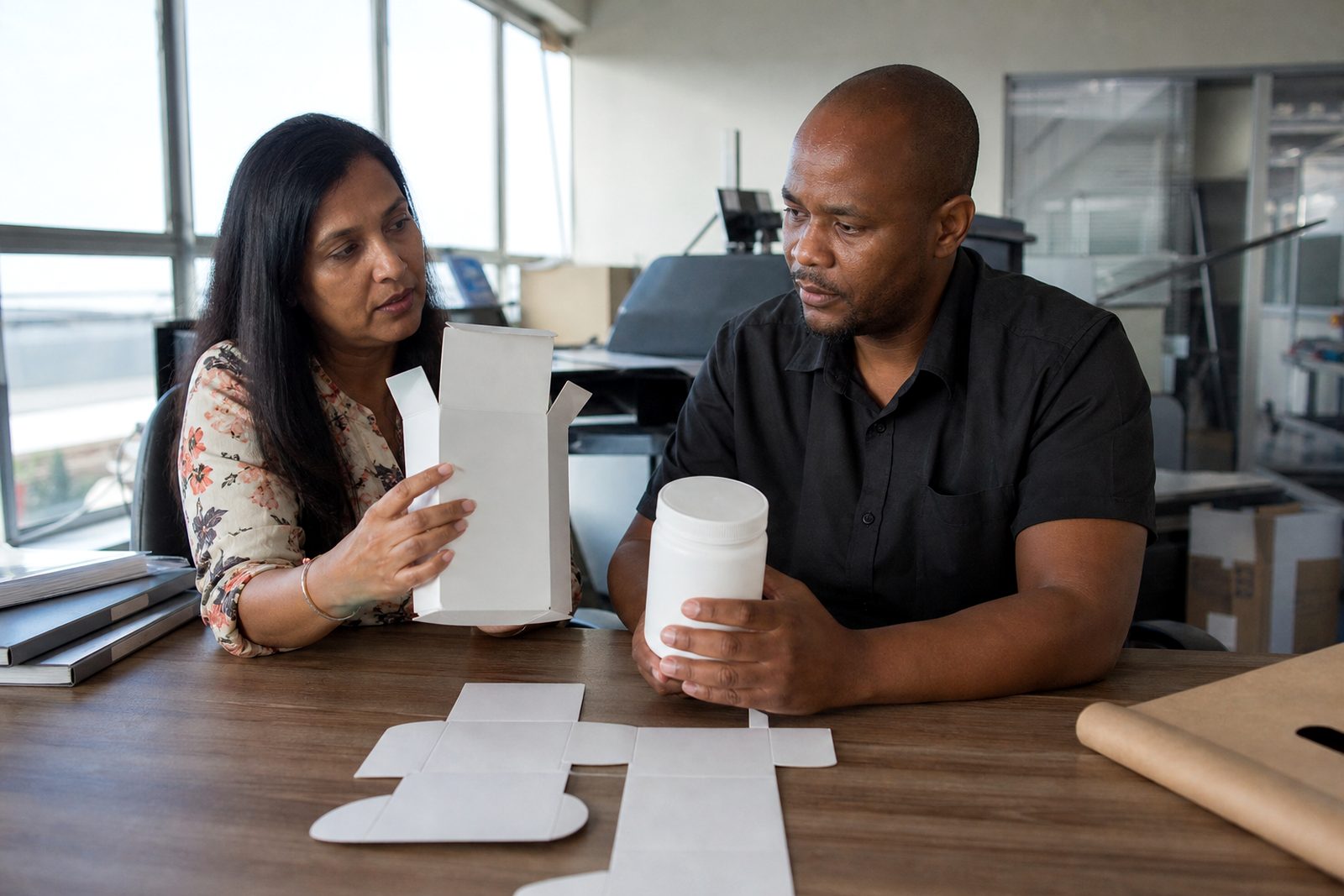
The three approval stages
Most packaging jobs pass through three checks before the full run. Each one looks at something different, and skipping a stage is where expensive surprises come from.
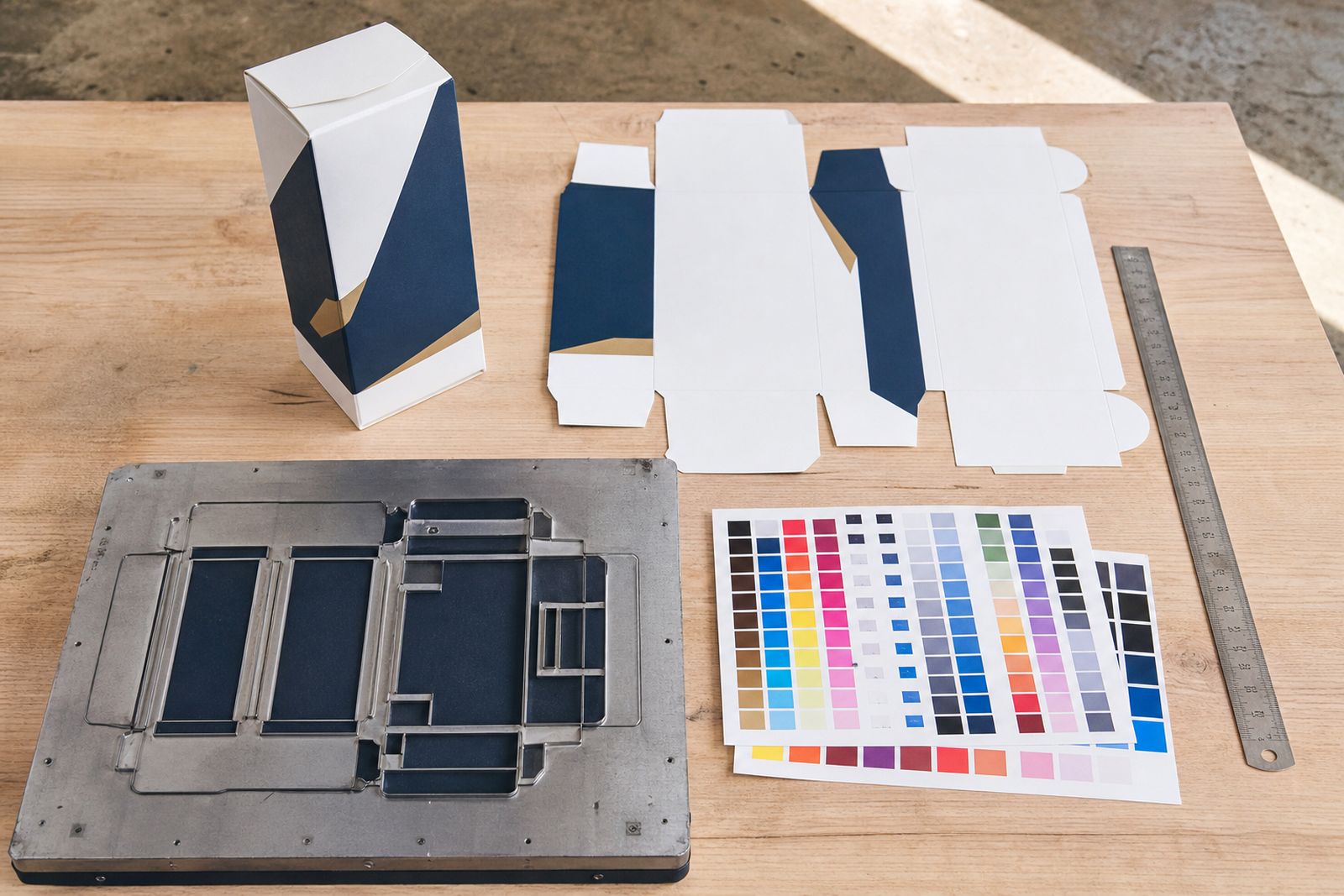
- Dieline: the flat cutting and folding plan for the carton
- Plain sample: an unprinted carton cut from the chosen board
- Printed proof: the artwork shown in colour, on screen or on paper
Checking the dieline
The dieline shows every cut, crease and glue area of the carton laid flat. Check the internal dimensions against the product, including any inserts or leaflets that go inside, and confirm which panel will face forward on the shelf.
Make sure the artwork is placed on the latest dieline version. A small change to a flap or glue area can move panels and push text or barcodes onto a fold.
Testing the plain sample
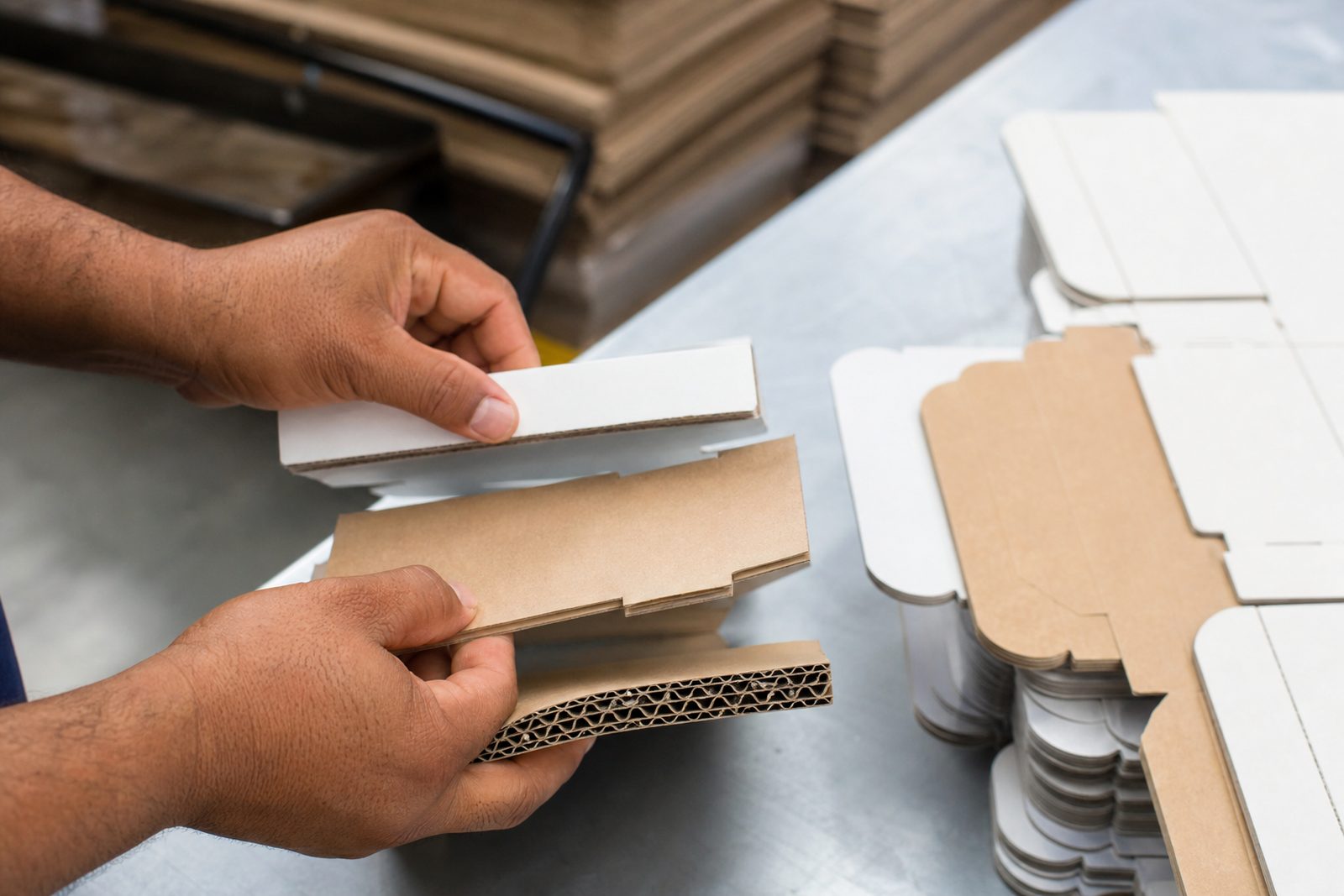
A plain sample carton is the best way to test fit and construction. Put the actual product inside, close and open the carton, and check that flaps tuck in properly and the product does not rattle or squeeze.
If cartons are packed by machine or on a busy packing line, test the sample with the people who will pack it. A carton that is fiddly to erect slows packing down every day.
- Product fits with any inserts or leaflets
- Flaps close and tuck properly
- Carton stands square on a shelf
- Easy to erect for packers
Reviewing the printed proof
Read every word on the proof, including small print, ingredients, instructions and contact details. Check that compulsory information appears where it must, and that barcodes sit on a flat panel with enough clear space around them.
Look at colours with realistic expectations. Colours on a screen proof differ from print, and board type changes the result. If brand colours are critical, ask for a printed colour proof on the chosen board.
Common mistakes caught at sample stage
Many packaging problems only show up once a real carton is in your hand. A barcode that looked fine on screen sits across a fold. A tuck flap is printed upside down. The product name faces the back of the shelf because the carton is loaded from the other end.
Other common issues include text placed inside the glue area, where it is hidden once the carton is glued, and important information too close to a crease, where it cracks or disappears around the corner. Checking a sample with the artwork wrapped around it catches these before the run.
- Barcodes or text across folds
- Upside-down flaps and panels
- Text hidden in the glue area
- Front panel facing the wrong way on the shelf
Signing off clearly
Name one person who gives final approval and make sure they have checked the dieline, sample and proof together. Collect all corrections in a single list so nothing is missed between versions.
Keep a copy of the approved proof and sample. They become the reference for checking the delivered cartons and for matching future reprints.
What our Commercial Printing customers say
Verified Google reviews
Questions we get asked
Why do I need a plain sample carton?
A plain sample shows whether the product fits and the carton closes properly before money is spent on printing and cutting the full run.
Can I approve colour from a screen proof?
Screen proofs are fine for layout and text. For critical brand colours, a printed proof on the chosen board gives a more reliable guide.
Where should barcodes go?
On a flat panel, away from folds and edges, with clear space around them so scanners read them easily.
How many rounds of proofs are normal?
Most jobs need one or two rounds. Collecting every correction in one list for each round keeps the number of versions down.
Also worth a look
Ask for a quote
Send the print, packaging or branding details, sizes, quantities and delivery town through the contact form, and MGP Services will reply with a quote for the work.
Open the contact form