

Getting print quantities right
Order too few and you pay for a rushed reprint. Order too many and cartons or brochures sit in storage until the content is out of date. A few simple questions about usage, storage and change make it easier to pick a quantity that suits the job.
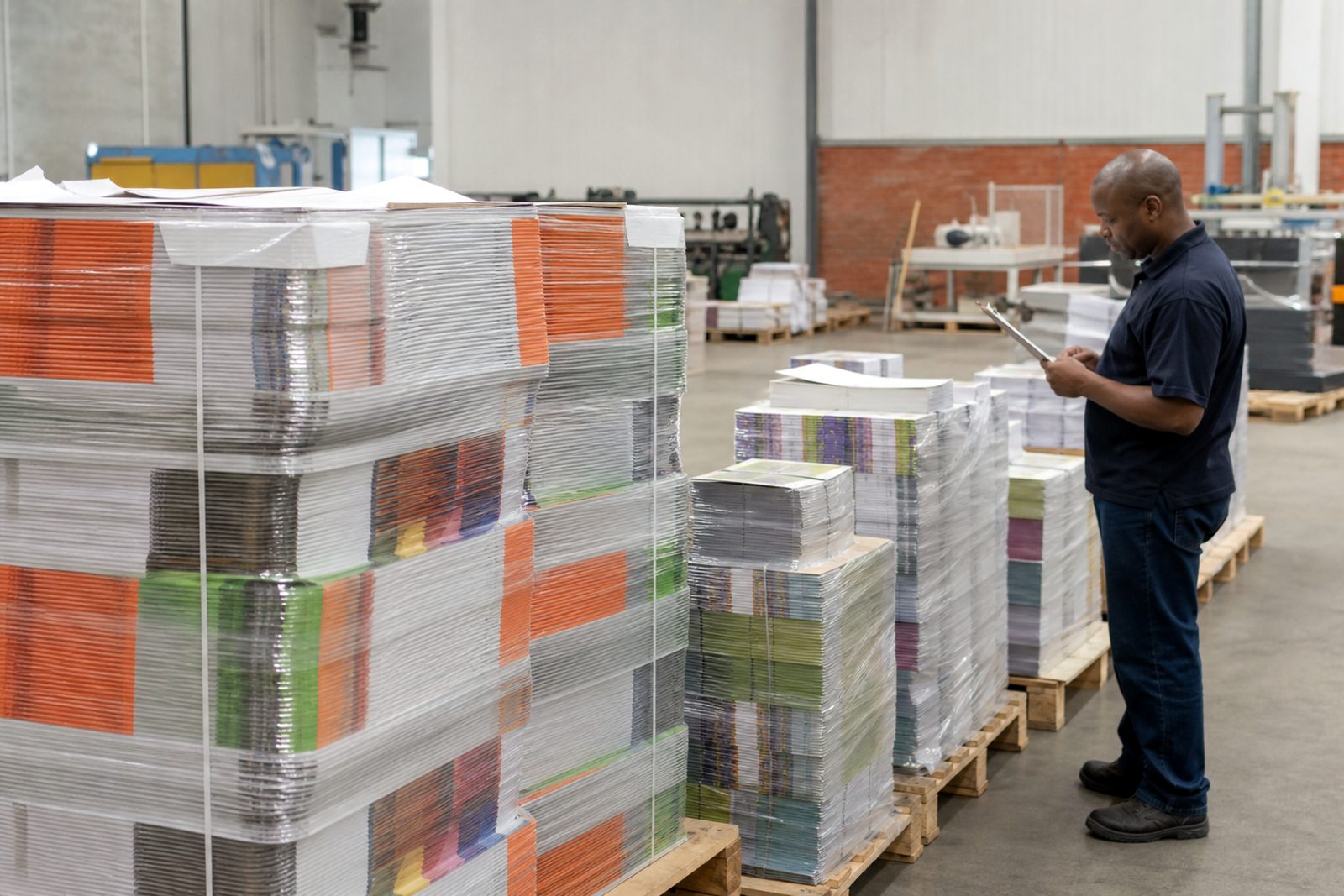
Start with how fast it is used
Look at how many items you used over the last few months, or estimate from sales forecasts for a new product. Monthly usage gives a starting point for how many months of stock a single run should cover.
For packaging, base the figure on production plans for the product. For marketing print, base it on events, mailings and how many items each branch or rep hands out.
Think about how long the content lasts
Prices, contact details, regulations, product ranges and branding all change. A brochure with prices may only last until the next price change. A carton with compulsory product information may need updating when regulations or ingredients change.
Items with content that changes often suit smaller, more frequent runs. Items that stay the same for a long time suit larger runs, where the unit cost usually drops.
- Prices and offers: short life, smaller runs
- Contact and branch details: medium life
- Stable packaging and stationery: longer runs
- Seasonal items: matched to the season only
Short runs and bulk runs
Digital printing suits short runs, test batches, personalised items and content that changes often, because there are no plates to make. Litho and flexo suit larger runs, where the setup is spread across many more items and the unit cost falls.
For a new product, a short first run can test the packaging and the market before committing to a larger order. Once the design and demand are proven, a bulk run usually makes more sense.
Storage and handling
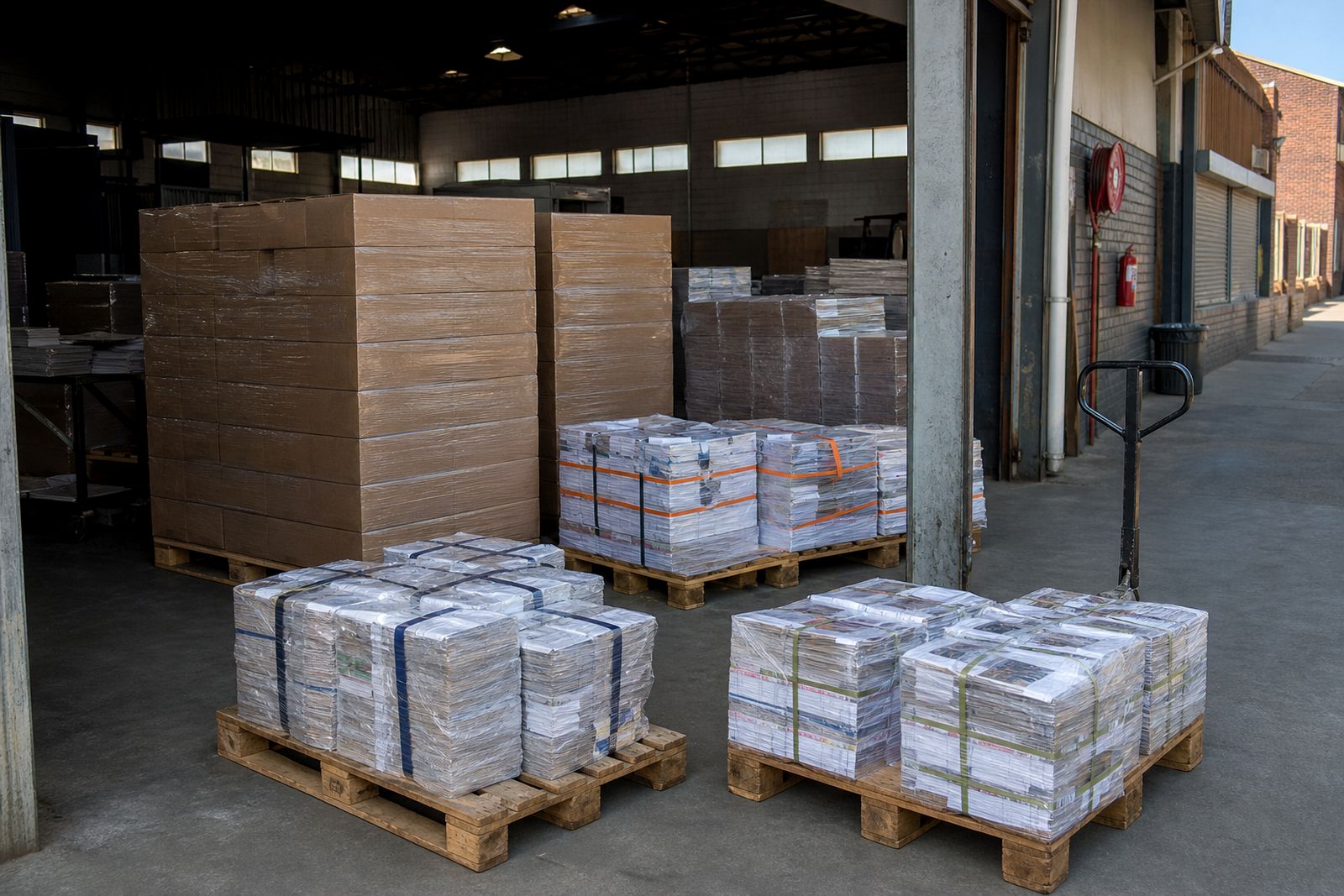
Large quantities need space. Cartons are stored flat, but pallets of board still take room, and print needs to stay dry and flat. In humid conditions, poorly stored stock can curl, soften or mark.
If storage is limited, ask about splitting a run into scheduled deliveries, so stock arrives in batches as it is needed.
- Store flat, dry and out of direct sun
- Allow pallet space for packaging stock
- Ask about scheduled deliveries for large runs
A simple worked example
Say a business uses about 2,000 product leaflets a month and the content is reviewed every six months. A run of 12,000 covers the full life of the content without leftovers. If storage only allows 6,000 at a time, two scheduled deliveries solve the problem.
For cartons, the same thinking applies. If a product sells 5,000 units a month and the packaging stays the same for a year, a larger run with scheduled deliveries may suit. If the packaging is likely to change after a trial period, a smaller first run keeps the risk low.
- Monthly usage multiplied by months of content life
- Adjusted for storage space
- Split into scheduled deliveries where needed
Planning reorders
Set a reorder point, the stock level at which a new run must be ordered so it arrives before the last items are used. Base it on monthly usage and the time a new run takes, including proofs and delivery.
Keep the approved artwork, specification and quantities from each run together. That makes reorders simpler and helps you adjust the quantity next time based on how long the last run lasted.
What our Commercial Printing customers say
Verified Google reviews
Questions we get asked
How many should I order the first time?
For a new product or design, a short first run is often sensible. It tests the design and demand before a larger order.
Why does a larger run cost less per item?
Litho and flexo setup costs are spread across more items, so the unit cost usually drops as the quantity rises.
Can a large order be delivered in batches?
Ask about scheduled deliveries when you enquire. Splitting delivery helps when storage space is limited.
What is a reorder point?
It is the stock level at which you order the next run, so new stock arrives before the old runs out. It depends on monthly usage and production time.
Also worth a look
Ask for a quote
Send the print, packaging or branding details, sizes, quantities and delivery town through the contact form, and MGP Services will reply with a quote for the work.
Open the contact form